Shell, Wyoming$
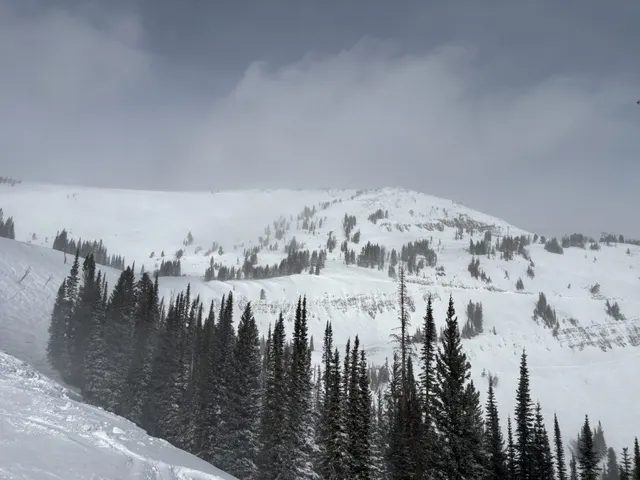
Antelope Butte opened in 1959 and operated as a community ski area in the Bighorn Mountains of north-central Wyoming for several decades before falling into disuse. After a prolonged closure, a nonprofit effort led by the Antelope Butte Foundation worked to restore and reopen the mountain, a project that drew significant regional attention as an example of grassroots ski area revival. The mountain has long held a reputation among Wyoming skiers as an affordable, uncrowded alternative to larger destination resorts, valued for its straightforward character and its role serving rural communities in the Bighorn Basin.
The mountain offers 180 skiable acres and 1,020 feet of vertical drop, with a base elevation of 8,400 feet and a summit at 9,420 feet. Two lifts serve the terrain, and the longest run stretches approximately one mile. Average annual snowfall of around 200 inches supports a reliable season in the Bighorns. The area suits beginner and intermediate skiers particularly well, though the upper mountain provides enough pitch to engage stronger riders. The setting near Shell, Wyoming is notably remote, which keeps crowds thin and lends the place a quiet, regional feel distinct from more developed Wyoming ski destinations.
Where Antelope Butte places by community score.
Read: Best Resorts in USA →From 20 seasons of snowfall history, matched to the published annual average
Reliability
71/100 · Reliable
More reliable than 82% of mountains
Best weeks
Apr 11–May 1
Mid-season dry spellThe share of past seasons with a stretch of 14 days or more in a row with no real new snow (under 1 cm, about half an inch, a day), in the heart of the season: mid-December to mid-March (mid-June to mid-September in the Southern Hemisphere).
10% of years
Fewer dry spells than 89% of mountains
Chance of a 6"+ day, by week
Tap a weekHover a week
How often the snow falls light and dry, from 20 seasons of hourly weather
Light and dry
91%
of its snow falls below 28°F
Region rank
#20 in the U.S. Rockies
of 94 mountains
State rank
#2 in Wyoming
of 10 mountains
Snow by type
Cold smoke58%
Under 20°F
Dry33%
20–28°F
Dense8%
28–32°F
Wet2%
Over 32°F
Light and dry, compared
Vertical drop
1,020 ft
Base elevation
8,400 ft
Peak elevation
9,420 ft
Size (acres)
180
Total lifts
2
Longest run
1 mi
Annual snowfall
200"
Total trails
25
Terrain parks
1
Sun & shade
Mostly northwest-facing: holds snow well, cold in January.
Which runs are sunny, hour by hour →How Antelope Butte ranks on each trait against every mountain on Slope Vaults. Dashed line: the median mountain.
Known for steeps and reliability. Closest match: Mont Orignal (94% alike).
No reviews yet
Be the first to say what it’s like.
The closest commercial airports are Cody Regional Airport (COD), roughly 45 minutes east via US-14/16/20, and Worland Municipal Airport (WRL), approximately 45 minutes south. Billings Logan International Airport (BIL) in Montana is a larger option with more carrier choices, around 2.5 hours north. All routes involve driving through the Bighorn Basin, and US-14 through Bighorn Canyon can be subject to winter closures or delays, so checking Wyoming road conditions before heading up is advisable.
There is no public transit or scheduled shuttle service to Antelope Butte. Most visitors stay in Shell or the nearby town of Greybull, about 25 miles south, which offers basic lodging and services. Cody and Worland are also common bases for those preferring more amenities.
Shell is a tiny community of fewer than 100 people, so après-ski is low-key and self-reliant, think packed coolers and lodge conversation rather than busy bar scenes. The mountain's day lodge serves as the social hub during operating hours. The nearest town with more services is Greybull, roughly 30 miles east, where you'll find basic diners and a handful of local restaurants. Cody, about 75 miles southwest, offers a fuller range of dining and accommodation options.
Beyond skiing, the surrounding Bighorn Mountains reward snowshoers and backcountry explorers. Shell Canyon, carved by Shell Creek just below the resort, is a dramatic geological feature worth a stop on your drive in or out.
Matched on size, snow, terrain and more