Maggie Valley, North Carolina$$
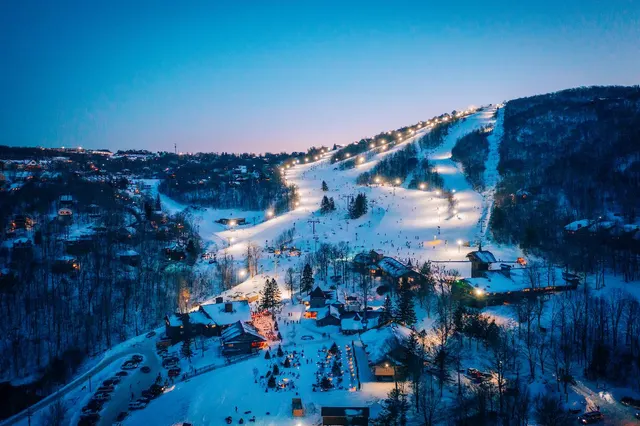
Cataloochee Ski Area opened in 1961, making it one of the oldest ski resorts in the Southeast. Located near Maggie Valley in the Smoky Mountains of western North Carolina, it has built a loyal regional following over more than six decades as a family-oriented destination that introduces generations of Southern skiers to the sport. The resort has remained independently operated and retains a down-to-earth character that regulars appreciate. It hosts the annual Rail Jam competition and other events that draw younger freestyle skiers and snowboarders from across the region.
The mountain rises to a summit elevation of 5,400 feet with a vertical drop of 740 feet across 50 skiable acres served by five lifts. The longest run stretches about a mile, and the trail mix skews toward beginner and intermediate terrain, making Cataloochee well suited to families and developing skiers rather than advanced riders seeking steep challenges. Named runs include Omigosh, one of the more demanding trails on the mountain. Average annual snowfall of around 40 inches is supplemented heavily by snowmaking, which is essential given the mid-Atlantic climate. Access is via a winding mountain road off US-19, and the base area is compact and straightforward with no on-mountain lodging.
Where Cataloochee places by community score.
Read: Best Resorts in USA →From 20 seasons of snowfall history, matched to the published annual average
Reliability
17/100 · Unreliable
More reliable than 1% of mountains
Best weeks
Jan 17–Feb 6
Mid-season dry spellThe share of past seasons with a stretch of 14 days or more in a row with no real new snow (under 1 cm, about half an inch, a day), in the heart of the season: mid-December to mid-March (mid-June to mid-September in the Southern Hemisphere).
90% of years
Fewer dry spells than 4% of mountains
Chance of a 6"+ day, by week
Tap a weekHover a week
How often the snow falls light and dry, from 20 seasons of hourly weather
Light and dry
49%
of its snow falls below 28°F
Region rank
#6 in the Southeast U.S.
of 15 mountains
State rank
#2 in North Carolina
of 5 mountains
Snow by type
Cold smoke8%
Under 20°F
Dry41%
20–28°F
Dense33%
28–32°F
Wet18%
Over 32°F
Light and dry, compared
Vertical drop
740 ft
Base elevation
4,660 ft
Peak elevation
5,400 ft
Size (acres)
50
Total lifts
5
Longest run
1 mi
Annual snowfall
40"
Total trails
18
Terrain parks
1
Sun & shade
Mostly northwest-facing: holds snow well, cold in January.
Which runs are sunny, hour by hour →How Cataloochee ranks on each trait against every mountain on Slope Vaults. Dashed line: the median mountain.
No reviews yet
Be the first to say what it’s like.
The closest major airport is Asheville Regional Airport (AVL), roughly 50 miles west of Cataloochee, typically about an hour's drive. Charlotte Douglas International (CLT) is around 150 miles to the east, making it a two-and-a-half-hour drive and a common choice for visitors flying from farther afield. Raleigh-Durham (RDU) is also used by travelers coming from the Triangle area, around three hours away.
Access to the ski area runs via a narrow, winding mountain road off US-276 near Maggie Valley. This road can close or become treacherous during heavy snow or ice, so checking conditions before departing is advisable. No regular public transit serves the resort. Maggie Valley is the primary base town for overnight stays, with additional lodging options in Waynesville, roughly 15 miles away.
Maggie Valley, a short drive from the slopes, serves as the main base for après options. The town has a handful of casual restaurants and bars along its main strip, with Smiley's Acoustic Café a well-known local gathering spot offering live music most evenings. Dining options range from traditional Southern cooking to pizza and bar food suited to hungry skiers.
Away from the mountain, Maggie Valley sits near the entrance to Great Smoky Mountains National Park, where scenic drives and winter hiking are popular. The Wheels Through Time motorcycle museum in town is open seasonally and draws visitors year-round. The broader region around Cherokee and Waynesville offers additional dining, shopping, and cultural stops worth exploring.
Matched on size, snow, terrain and more