
Palisades Tahoe
 Olympic Valley, California$$$$
About this mountain
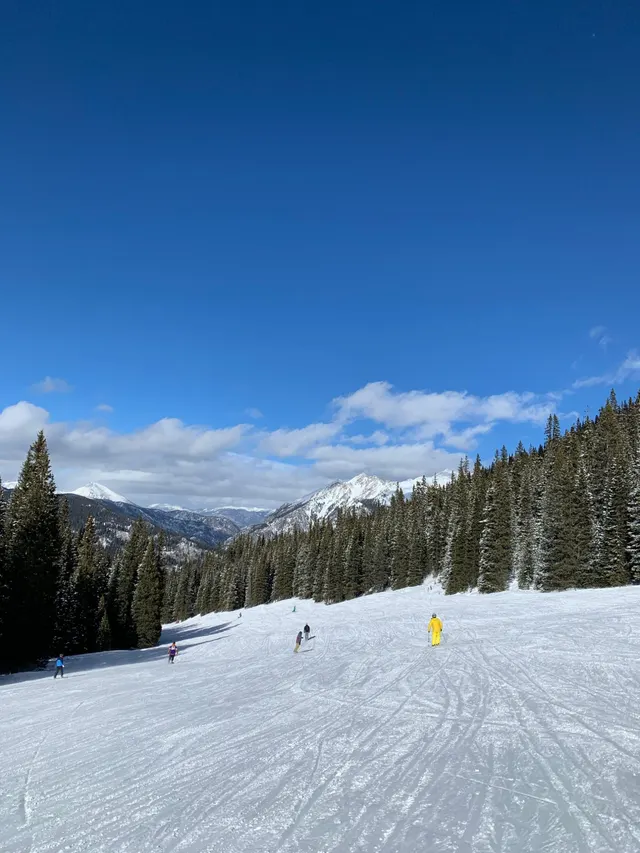
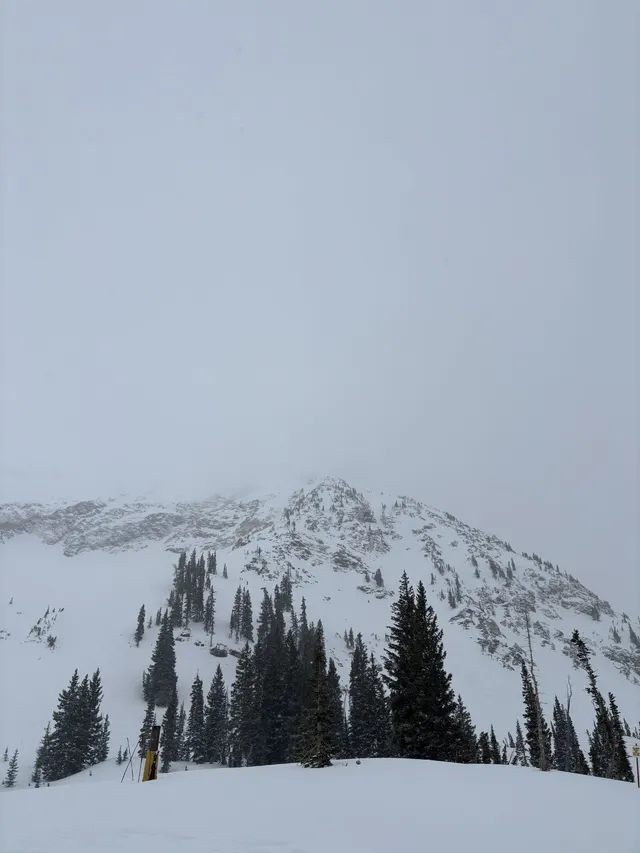
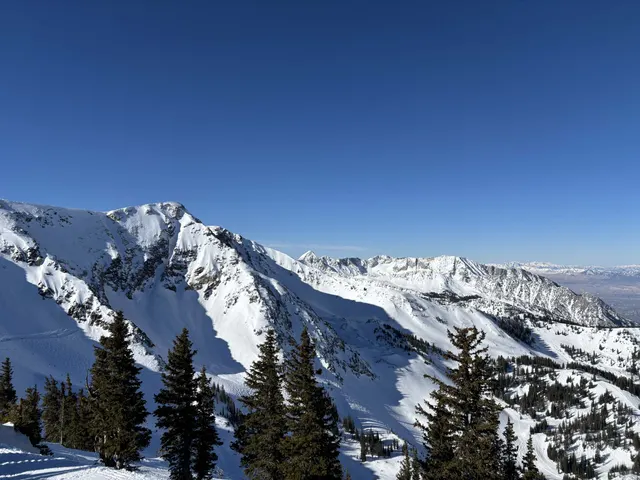
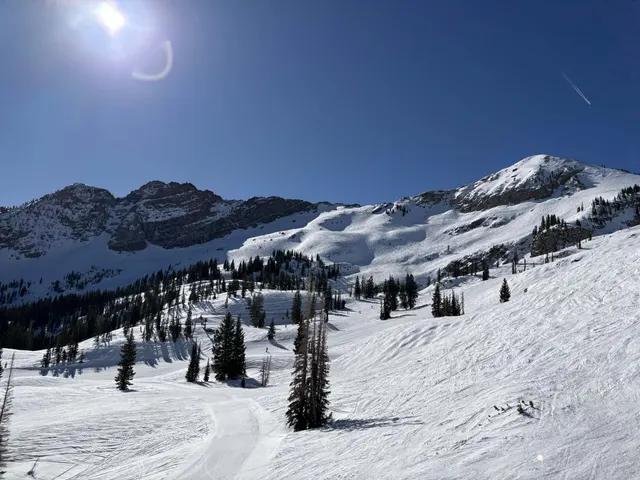
Palisades Tahoe opened in 1949 as Squaw Valley Ski Resort and built its reputation quickly, hosting the 1960 Winter Olympics, the first Games to be televised in the United States. That event put the resort on the international map, and it has remained one of the most recognized ski areas in North America. The resort rebranded as Palisades Tahoe in 2021, a change that also reflected its operational merger with the adjacent Alpine Meadows, which sits on the other side of the ridge. The combined area is accessible on the Ikon Pass.
The resort offers 6,000 skiable acres across two mountains, with 2,850 feet of vertical from a base elevation of 6,200 feet to a summit of 9,050 feet. The longest run stretches 3.2 miles, and 29 lifts serve the terrain. Palisades is particularly known for its challenging above-the-treeline bowls and exposed ridge terrain, which attracts advanced and expert skiers, though groomed cruising runs and beginner areas exist at lower elevations. Average annual snowfall of around 400 inches supports a long season. The village at the Palisades base includes lodging, restaurants, and a gondola connecting to the High Camp facility partway up the mountain.
Rankings
Where Palisades Tahoe places by community score.
Read: Best Resorts in USA →Conditions
Snow reliability
From 20 seasons of snowfall history, matched to the published annual average
Reliability
77/100 · Reliable
More reliable than 87% of mountains
Best weeks
Dec 6–26
Mid-season dry spellThe share of past seasons with a stretch of 14 days or more in a row with no real new snow (under 1 cm, about half an inch, a day), in the heart of the season: mid-December to mid-March (mid-June to mid-September in the Southern Hemisphere).
70% of years
Fewer dry spells than 18% of mountains
Chance of a 6"+ day, by week
Tap a weekHover a week
Powder quality
How often the snow falls light and dry, from 20 seasons of hourly weather
Light and dry
65%
of its snow falls below 28°F
Region rank
#10 in the Sierra Nevada
of 25 mountains
State rank
#9 in California
of 27 mountains
Snow by type
Cold smoke14%
Under 20°F
Dry51%
20–28°F
Dense31%
28–32°F
Wet4%
Over 32°F
Light and dry, compared
Mountain
Vertical drop
2,850 ft
Base elevation
6,200 ft
Peak elevation
9,050 ft
Size (acres)
6,000
Total lifts
29
Longest run
3.2 mi
Annual snowfall
400"
Total trails
175
Terrain parks
5
Sun & shade
Mostly north-facing: holds snow well, cold in January.
Which runs are sunny, hour by hour →Trail breakdown
All lifts & trailsMountain DNA
Compare this mountain →How Palisades Tahoe ranks on each trait against every mountain on Slope Vaults. Dashed line: the median mountain.
Known for size and value. Closest match: Copper Mountain (93% alike).
- Size
- Vertical
- Snow
- Reliability
- Steeps
- Cruisers
- Value
Reviews(3)
Terrain
Scenery
Snow
Lifts
Après
What users say
What Skiers + Riders Say: Visitors consistently highlight the terrain as a standout feature, noting that it leans toward expert-level skiing with abundant black and double black runs, though some mention that options exist for less advanced people as well. The Meadows side is noted as being more relaxed in character. Snow conditions come up across reviews but opinions vary, with people describing rapid changes in quality and acknowledging that timing a visit to peak season matters considerably. Crowds, value, and atmosphere are not addressed consistently enough across these reviews to draw reliable conclusions.
User reviews

1mo
Although we visited in mid-April, it was easy to see what makes Palisades Tahoe so special. Terrain offers something for everyone, but is prone to wind or snow closures somewhat often. Meadows side is much more relaxed.

1mo
Went during late March so wasn’t super great conditions, but regardless one of the best mountains I’ve ever skied. Experts playground, black and double blacks for as far as the eye can see. Only reason it’s not a 10 is the conditions, but imagine it would be if I were to go back in peak season.
Nearby
Getting there
The closest major airport is Reno-Tahoe International Airport (RNO), roughly 45 miles southeast of the resort and typically a 45–60 minute drive depending on conditions. San Francisco International Airport (SFO) is around 200 miles away, making it a roughly 3.5–4 hour drive under normal circumstances.
The main road in is Highway 89 through Tahoe City, which connects to Squaw Valley Road leading directly to the base. This route can be subject to chain controls or temporary closures during heavy storms, so carrying chains or driving an AWD/4WD vehicle is strongly advised. Most visitors stay in Tahoe City, Truckee, or South Lake Tahoe. TART Connect offers public bus service linking nearby communities to the resort, providing a practical alternative to driving.
While you’re there
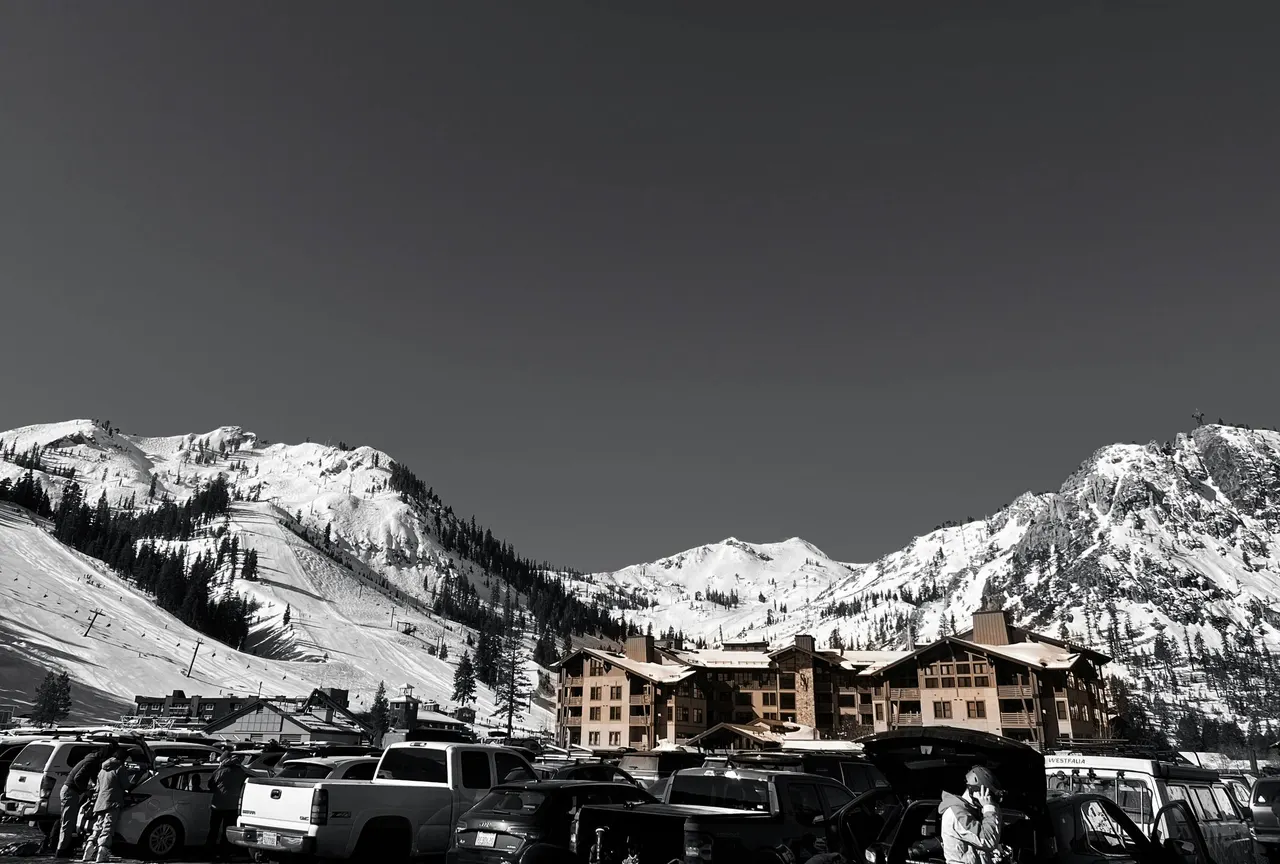
The base village at Olympic Valley has a solid après scene clustered around the resort's main lodge area, with options ranging from casual slope-side bars to sit-down dining. KT Base Bar is a reliable first stop after skiing, with a covered outdoor deck and a straightforward drinks menu. The nearby town of Tahoe City, about 15 minutes away, broadens the options considerably, offering lakefront restaurants, breweries, and cocktail bars along its compact main strip.
Beyond skiing, Olympic Valley itself is relatively quiet, but Lake Tahoe provides the backdrop for snowshoeing, cross-country skiing, and winter hiking. The lake is also worth visiting simply for the scenery, at over 1,600 feet deep, it stays a striking blue even in winter. Squaw Valley's gondola operates for sightseeing on select days, and the Resort at Squaw Creek offers an on-site spa for post-ski recovery.
Mountains like this
Matched on size, snow, terrain and more