 Fairmont Hot Springs, British Columbia$$
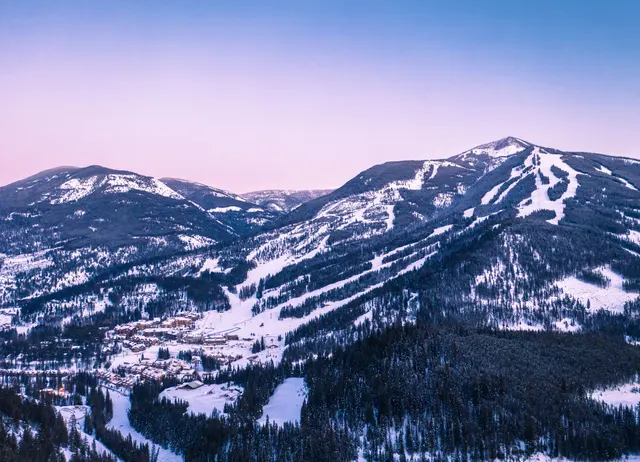
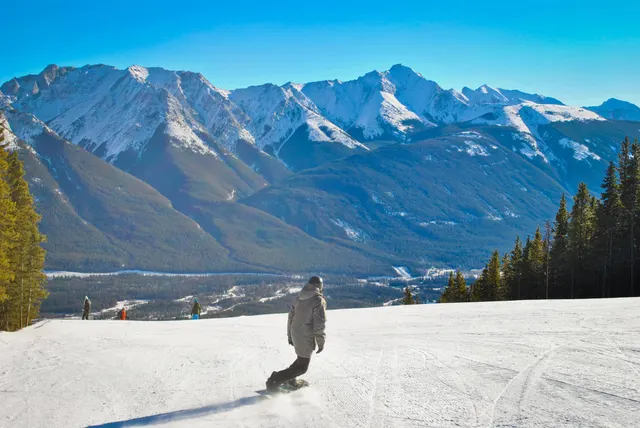
Fairmont Hot Springs Ski Resort has operated since the 1960s, developing gradually as a community-oriented destination serving the Columbia Valley in southeastern British Columbia. It has never positioned itself as a destination resort in the way that larger Kootenay-area mountains have, but it has built a loyal following among families and intermediate skiers who value its relaxed atmosphere and low lift-line pressure. The resort sits within the broader Fairmont Hot Springs community, which is best known for its naturally heated outdoor pools, giving skiers a distinctive après-ski option that few mountain resorts can match.
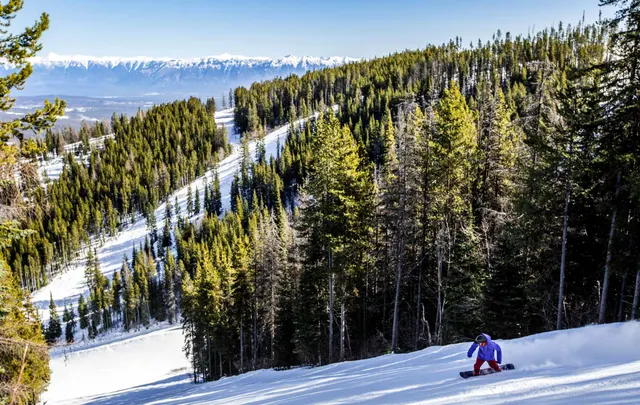
The mountain offers 304 skiable acres across a 1,000-foot vertical drop, with the base sitting at 3,800 feet and the summit reaching 4,800 feet. Three lifts serve the terrain, which skews toward beginner and intermediate ability levels, making it well suited to families and those developing their skills. The longest run stretches 1.5 miles, and the resort averages around 100 inches of snowfall annually. Access is straightforward from the town of Fairmont Hot Springs, and the compact scale of the operation means the hill can be explored thoroughly in a single day without the crowding common at larger resorts.
Where Fairmont Hot Springs places by community score.
Read: Best Resorts in North America →From 20 seasons of snowfall history, matched to the published annual average
Reliability
42/100 · Hit or miss
More reliable than 25% of mountains
Best weeks
Dec 6–26
Mid-season dry spellThe share of past seasons with a stretch of 14 days or more in a row with no real new snow (under 1 cm, about half an inch, a day), in the heart of the season: mid-December to mid-March (mid-June to mid-September in the Southern Hemisphere).
45% of years
Fewer dry spells than 48% of mountains
Chance of a 6"+ day, by week
Tap a weekHover a week
How often the snow falls light and dry, from 20 seasons of hourly weather
Light and dry
54%
of its snow falls below 28°F
Region rank
#16 in the Canadian Rockies
of 16 mountains
Province rank
#28 in British Columbia
of 39 mountains
Snow by type
Cold smoke18%
Under 20°F
Dry36%
20–28°F
Dense32%
28–32°F
Wet14%
Over 32°F
Light and dry, compared
Vertical drop
1,000 ft
Base elevation
3,800 ft
Peak elevation
4,800 ft
Size (acres)
304
Total lifts
3
Longest run
1.5 mi
Annual snowfall
100"
Total trails
14
Terrain parks
0
Sun & shade
Mostly west-facing: afternoon sun. The slopes are best after lunch.
Which runs are sunny, hour by hour →How Fairmont Hot Springs ranks on each trait against every mountain on Slope Vaults. Dashed line: the median mountain.
Known for steeps. Closest match: Berkshire East (86% alike).
No reviews yet
Be the first to say what it’s like.
The closest major airport is Calgary International Airport (YYC), roughly a 2.5-hour drive west along Highway 93/95 through the Columbia Valley. Cranbrook Airport (YXC) is a smaller regional option about 1.5 hours to the south, with more limited flight connections. The approach via Highway 93/95 is generally reliable year-round, though winter driving conditions can be challenging and travellers should carry chains or use winter-rated tires.
There is no dedicated ski shuttle serving Fairmont Hot Springs Resort. Most visitors drive independently and stay either at the resort itself, which has on-site accommodation, or in nearby Invermere, roughly 20 minutes north. Radium Hot Springs is also within about 30 minutes and offers additional lodging options along the main highway corridor.
The resort's own lodge serves as the natural gathering spot after skiing, with casual dining and drinks steps from the slopes. The village of Fairmont Hot Springs is small, so après options are limited, but the nearby town of Invermere, about 20 minutes north, offers a broader range of restaurants and pubs worth exploring for dinner.
The undisputed highlight away from the slopes is the Fairmont Hot Springs Resort, which operates one of Canada's largest natural mineral hot springs pools, an obvious choice after a day on the hill. The surrounding Columbia Valley also draws visitors for snowshoeing and ice fishing, and the broad valley views toward the Rockies and Purcells make even a quiet walk worthwhile.
Matched on size, snow, terrain and more