Whistler Blackcomb
 Whistler, British Columbia$$$$
About this mountain
Whistler Blackcomb sits about 75 miles north of Vancouver in the Coast Mountains of British Columbia and operates as two distinct interconnected mountains. Whistler Mountain opened in 1966 and Blackcomb followed in 1980, with the two eventually merging under common ownership in 1997. The resort built its international reputation through consistent snowfall, a long season typically running from late November into May, and sheer scale that keeps skiers exploring for days without repeating runs. It hosted the alpine and sliding events during the 2010 Winter Olympics and Paralympics, and the men's and women's downhill courses on Dave Murray Downhill remain open to the public.
The two mountains offer meaningfully different characters. Whistler's open bowls, including Symphony, Harmony, and Glacier, suit intermediate and advanced riders who want long, rolling terrain, while Blackcomb's Glacier Creek area and Spanky's Ladder access steeper technical lines and reliable spring snow. With 5,280 feet of vertical, a summit reaching 7,494 feet, roughly 8,171 skiable acres served by 37 lifts, and an average of 450 inches of snow annually, the mountain accommodates beginners through experts. The longest run stretches seven miles. The village at the base is pedestrian and walkable, with lodging, dining, and services concentrated between the two lift bases. Whistler Blackcomb is included on the Epic Pass.
Rankings
Where Whistler Blackcomb places by community score.
Read: Best Resorts in North America →Conditions
Snow reliability
From 20 seasons of snowfall history, matched to the published annual average
Reliability
93/100 · Very reliable
More reliable than 98% of mountains
Best weeks
Nov 1–21
Mid-season dry spellThe share of past seasons with a stretch of 14 days or more in a row with no real new snow (under 1 cm, about half an inch, a day), in the heart of the season: mid-December to mid-March (mid-June to mid-September in the Southern Hemisphere).
20% of years
Fewer dry spells than 81% of mountains
Chance of a 6"+ day, by week
Tap a weekHover a week
Powder quality
How often the snow falls light and dry, from 20 seasons of hourly weather
Light and dry
63%
of its snow falls below 28°F
Region rank
#10 in the Coast Mountains
of 18 mountains
Province rank
#22 in British Columbia
of 39 mountains
Snow by type
Cold smoke14%
Under 20°F
Dry49%
20–28°F
Dense34%
28–32°F
Wet3%
Over 32°F
Light and dry, compared
Mountain
Vertical drop
5,280 ft
Base elevation
2,214 ft
Peak elevation
7,494 ft
Size (acres)
8,171
Total lifts
37
Longest run
7 mi
Annual snowfall
450"
Total trails
398
Terrain parks
3
Sun & shade
Mostly northwest-facing: holds snow well, cold in January.
Which runs are sunny, hour by hour →Trail breakdown
All lifts & trailsTrail and lift data from OpenSkiData / OpenSkiMap.org, © OpenStreetMap contributors (ODbL), Skimap.org, Who’s On First, © Mapterhorn.
Mountain DNA
Compare this mountain →How Whistler Blackcomb ranks on each trait against every mountain on Slope Vaults. Dashed line: the median mountain.
Known for size and reliability. Closest match: Jackson Hole Mountain Resort (90% alike).
- Size
- Vertical
- Snow
- Reliability
- Steeps
- Cruisers
- Value
Reviews(3)
Terrain
Scenery
Snow
Lifts
Après
What users say
What Skiers + Riders Say: Visitors consistently praise Whistler Blackcomb's scale and terrain, particularly the alpine bowls, though several note that good visibility and reliable snow conditions are essential to getting the most out of the mountain. Snow consistency comes up as a recurring concern, with people suggesting the resort falls short of its potential when conditions are uncertain or poor. The village atmosphere and après scene receive strong approval across reviews. Crowds on weekends are mentioned as a drawback by at least one visitor.
User reviews

1mo
We had bad luck with the weather which created awful off-piste conditions for our entire trip. The town is awesome and there is so much to explore, but is a risk if weather is uncertain.
 Glacier Express
 Jersey Cream Express
 Peak 2 Peak Gondola

1mo
If the snow was more consistent would be the best resort in the world
Nearby
Getting there
The closest major airport is Vancouver International Airport (YVR), roughly 75 miles south of Whistler and typically a two-hour drive under normal conditions. Guests can also fly into Abbotsford International Airport (YXX), though the routing is less direct and offers fewer connections. The primary road to the resort is Highway 99, known as the Sea-to-Sky Highway, which winds through mountainous terrain and can be subject to closures or significant delays due to weather, rockslides, or accidents, checking DriveBC before departure is advisable. Epic Rides operates scheduled shuttle service between Vancouver and Whistler, providing a practical alternative to driving. Most visitors stay in Whistler Village or the adjacent Whistler Creekside, both of which offer ski-in/ski-out or slope-side accommodation with easy access to lifts.
While you’re there
Whistler village sits at the base of the mountain and offers a compact, walkable mix of restaurants, bars, and shops. Araxi Restaurant is a long-standing local institution known for its BC ingredients and wine list, while the Garibaldi Lift Co. bar at the gondola base is a reliable après stop with a lively patio. For something more casual, the village has no shortage of pubs and fondue spots suited to post-ski evenings. Up on the mountain, Roundhouse Lodge on Whistler's mid-mountain serves food and panoramic views of Blackcomb across the valley.
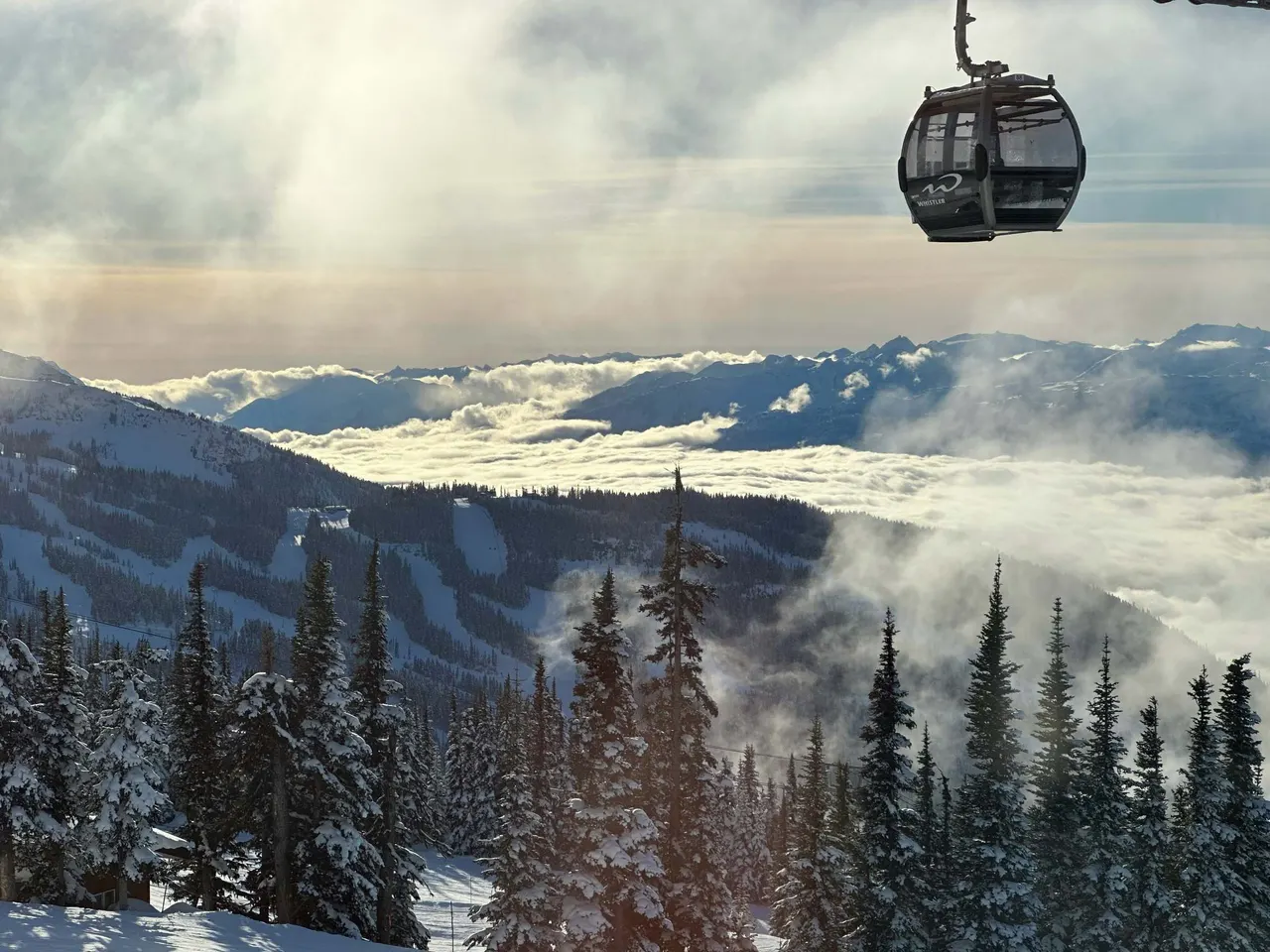
Beyond skiing, Whistler offers snowshoeing, snowmobiling, and tubing at the Coca-Cola Tube Park. The Peak 2 Peak Gondola connects the two mountains and is worth riding for the views alone, even on a non-ski day. The village also has a small arts scene, with the Audain Art Museum housing a notable collection of BC art.
Mountains like this
Matched on size, snow, terrain and more